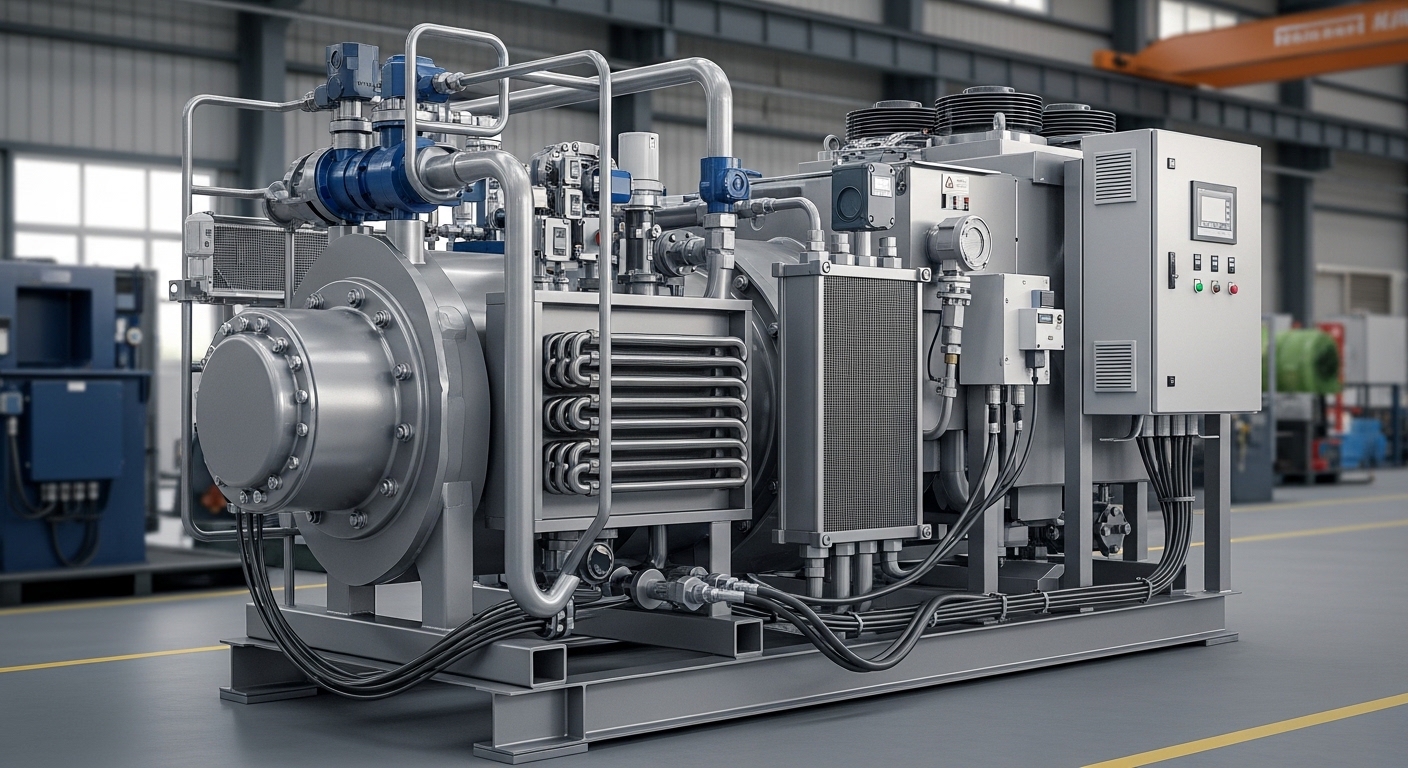
Hydraulic Chiller: Efficient cooling for hydraulic systems.
Efficient Cooling for Hydraulic Systems
A Hydraulic Chiller is a specialized industrial cooling solution designed to control and maintain the optimal temperature of hydraulic oil in hydraulic systems. In industrial environments, hydraulic machines operate under high pressure and continuous load, which generates significant heat. If this heat is not properly managed, it can lead to oil degradation, loss of efficiency, component wear, and system failure.
Hydraulic chillers play a critical role in Industrial Cooling & Air systems by ensuring stable temperature control, smooth machine operation, and long-term reliability of hydraulic equipment.
Hydraulic Cooling and Air Conditioning systems are used to control heat in industrial machines and working areas. During continuous operation, hydraulic systems generate high temperatures that can affect performance and damage components. Hydraulic cooling helps maintain the correct oil temperature, ensuring smooth and safe machine operation.
By keeping hydraulic oil cool, these systems protect pumps, valves, seals, and hoses from wear and overheating. This improves machine efficiency, reduces breakdowns, and increases equipment life. Stable temperature control also helps maintain accurate pressure and consistent output in hydraulic machines.
Industrial air conditioning supports hydraulic cooling by controlling the surrounding environment. It protects electrical panels and control rooms from excess heat and creates a comfortable and safe working space. Together, Hydraulic Cooling and Air Conditioning systems improve productivity, reduce maintenance costs, and ensure reliable performance in manufacturing plants, CNC machines, plastic processing units, and heavy industries.
What Is a Hydraulic Chiller?
A hydraulic chiller is a cooling system that removes excess heat from hydraulic oil by circulating it through a heat exchanger or cooling unit. The cooled oil is then returned to the hydraulic system, maintaining the oil temperature within the recommended operating range.
By keeping hydraulic oil at an optimal temperature, hydraulic chillers help maintain proper viscosity, lubrication quality, and pressure stability.
Importance of Hydraulic Cooling in Industrial Applications
Hydraulic systems are highly sensitive to temperature variations. Excessive heat can cause:
Breakdown of hydraulic oil
Reduced lubrication efficiency
Increased internal leakage
Damage to seals and valves
Frequent machine downtime
An efficient hydraulic chiller prevents these issues and ensures consistent system performance even during continuous or heavy-duty operations.
How a Hydraulic Chiller Works
The working process of a hydraulic chiller involves:
Hot hydraulic oil is circulated from the system
Heat is transferred to a cooling medium (air or water)
Oil temperature is reduced to a safe level
Cooled oil is returned to the hydraulic circuit
Continuous monitoring ensures stable operation
This controlled cooling process protects both the hydraulic oil and the machinery.
Types of Hydraulic Chillers
1. Air-Cooled Hydraulic Chillers
Use ambient air to dissipate heat. Suitable for environments with limited water availability.
2. Water-Cooled Hydraulic Chillers
Use chilled water for higher cooling efficiency. Ideal for heavy industrial applications.
Key Benefits of Hydraulic Chillers
Maintains optimal hydraulic oil temperature
Improves machine efficiency and accuracy
Extends hydraulic oil and component life
Reduces system failures and maintenance costs
Ensures smooth and uninterrupted operations
Energy Efficiency and Reliability
Modern hydraulic chillers are designed with energy-efficient components, smart temperature controls, and durable materials. This ensures reliable cooling performance while minimizing energy consumption and operational costs.
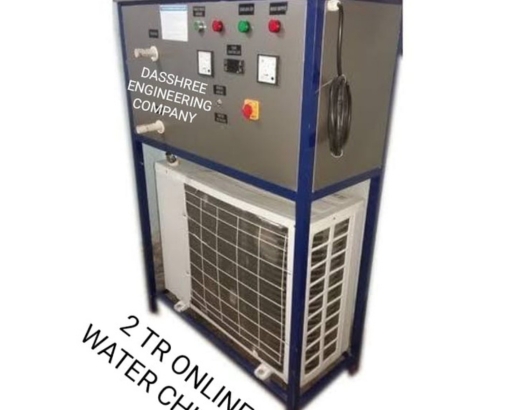
Applications of Hydraulic Chillers
Hydraulic chillers are widely used in:
Injection molding machines
CNC and machine tools
Press machines
Hydraulic power units
Industrial automation systems
Heavy engineering equipment
Benefits of Hydraulic Cooling & Air Conditioning
Proper cooling helps prevent overheating of hydraulic oil and machinery, which improves machine efficiency and accuracy. It reduces wear on pumps, valves, and seals, increasing equipment life and lowering maintenance costs. Stable temperature control also improves system reliability, minimizes unexpected breakdowns, and supports continuous production. Industrial air conditioning further protects control panels and electrical systems while creating a safer and more comfortable working environment.
Installation Process
The installation process starts by selecting a suitable location with proper ventilation and a stable surface. The hydraulic cooling unit is connected to the hydraulic system using secure oil inlet and outlet lines. Air conditioning units are installed to ensure even airflow and effective temperature control within the industrial space.
Electrical connections are completed according to system specifications, followed by safety checks. After installation, the system is tested under working conditions to confirm proper cooling performance, temperature stability, and smooth operation.
Let’s connect!
dasshreeengineering@gmail.com
Phone number
+91 9599352008